The Numbers Behind Former Gopher Grant Cruikshank's Early Success
The fifth-year senior has six goals and nine points in his first six games. Where has his early success come from and why?

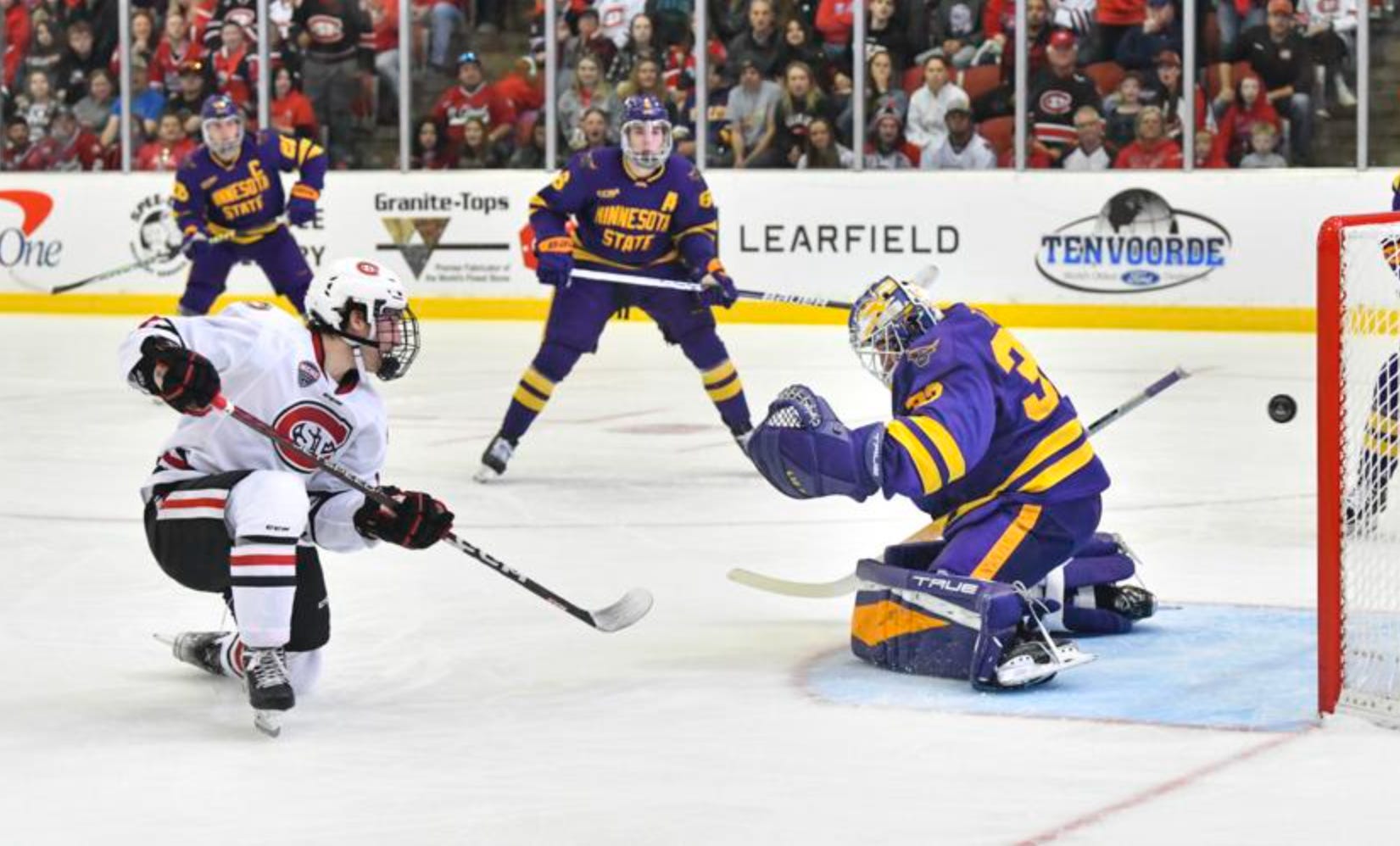
If you were to talk to anyone who is analytically minded or likes to use and look at hockey analytics when talking about a team or player, it is almost certain the word “play driver” will come up. But what is a play driver, why should you care or even coaches, and how does this relate to Grant Cruikshank?
To put it lightly, play driving or a play driver is a team or player who generates more shots and chances than said player/team. So, play driving means goals and more goals means more wins.
Tracking stats to determine if a player drives play is very time-consuming. Analytical stats that correlate to play driving also aren’t readily available in the media world for college hockey players, other than Instat. Luckily for you, I was able to track a multitude of stats last year on all Gopher hockey players, and after all things considered, Grant Cruikshank was far and away the most interesting player I tracked.
Before I get into what makes Cruikshank so effective and why he has had so much success early this season, I want to talk about why I believe he left the Gophers. Cruikshank was a senior during the 2021-2022 season, a season where he put up 7 goals and 15 points in 33 games. Those are certainly respectable numbers from afar, but numbers that would suggest Cruikshank was nothing more than a bottom-six forward.
Before the 2022-2023 Gophers season started I bet we all started to think about what six forwards would play in the top-six and what nine forwards would be in the top-nine. Although it wasn’t totally certain, Sammy Walker was going to move on from the Gophers after his senior season. Ben Meyers signed an NHL contract with the Colorado Avalanche and Blake McLaughlin signed his ELC with the Anaheim Ducks.
That’s three players out of the top six for the Gophers that won’t play in the 2022-23 season. Chaz Lucius was going to play over Cruikshank but elected to sign his ELC with the Winnipeg Jets. The other two from last year’s top six are Bryce Brodzinski and Matthew Knies.
Down the stretch last year Aaron Huglen, Mason Nevers, and Rhett Pitlick received more ice time than Cruikshank so you would think those three would be played over Cruikshank for the 22-23 season. Incoming freshmen Logan Cooley, Jimmy Snuggerud, and Brody Lamb were also prime candidates to get more ice time than Cruikshank. Knies and Brodzinski also announced they were coming back so shortly after, Cruikshank announced he was going to enter the transfer portal with some of his Gopher teammates.
Who knows, maybe the decision all along was for Cruikshank to transfer from Colorado College to Minnesota to put in his 30+ games and then transfer again. Last year was my first year covering the Gophers, so I guess I wouldn’t know if that was the case.
But from afar, Cruikshank likely saw he was going to be a bottom-six forward for the Gophers yet again so entering the transfer portal for his last year to get more ice time seemed like a good idea. Especially after joining Jaxon Nelson and Ryan Chesley in the Washington Capitals development camp before the season started.
After transferring from the Gophers to St. Cloud State, Cruikshank went from the bottom-six to the top-six in a matter of no time. At the time of this writing, Cruikshank has six goals and three assists for nine points in six games for the No. 2 ranked St. Cloud State Huskies.
Last week the Huskies were ranked No. 8 but after sweeping the No. 2 Minnesota State Mavericks, a series that saw Cruikshank post three goals and two assists, the Huskies moved up to one spot behind the Gophers. Their sweep also dropped the Mavericks, who split the series in the second weekend of October against the Gophers, from No. 2 to No. 8 all thanks to Grant Cruikshank’s impressive weekend.
"He brings it all, he's the total package," Huskies senior forward Kyler Kupka told Mick Hatten of The Rink Live. “Obviously, he's had the scoring touch lately. But more than that, he's our first player over the boards on the penalty kill and a great faceoff guy. He brings it all for our team and we're lucky to have him."
What Makes Cruikshank So Effective For SCSU?
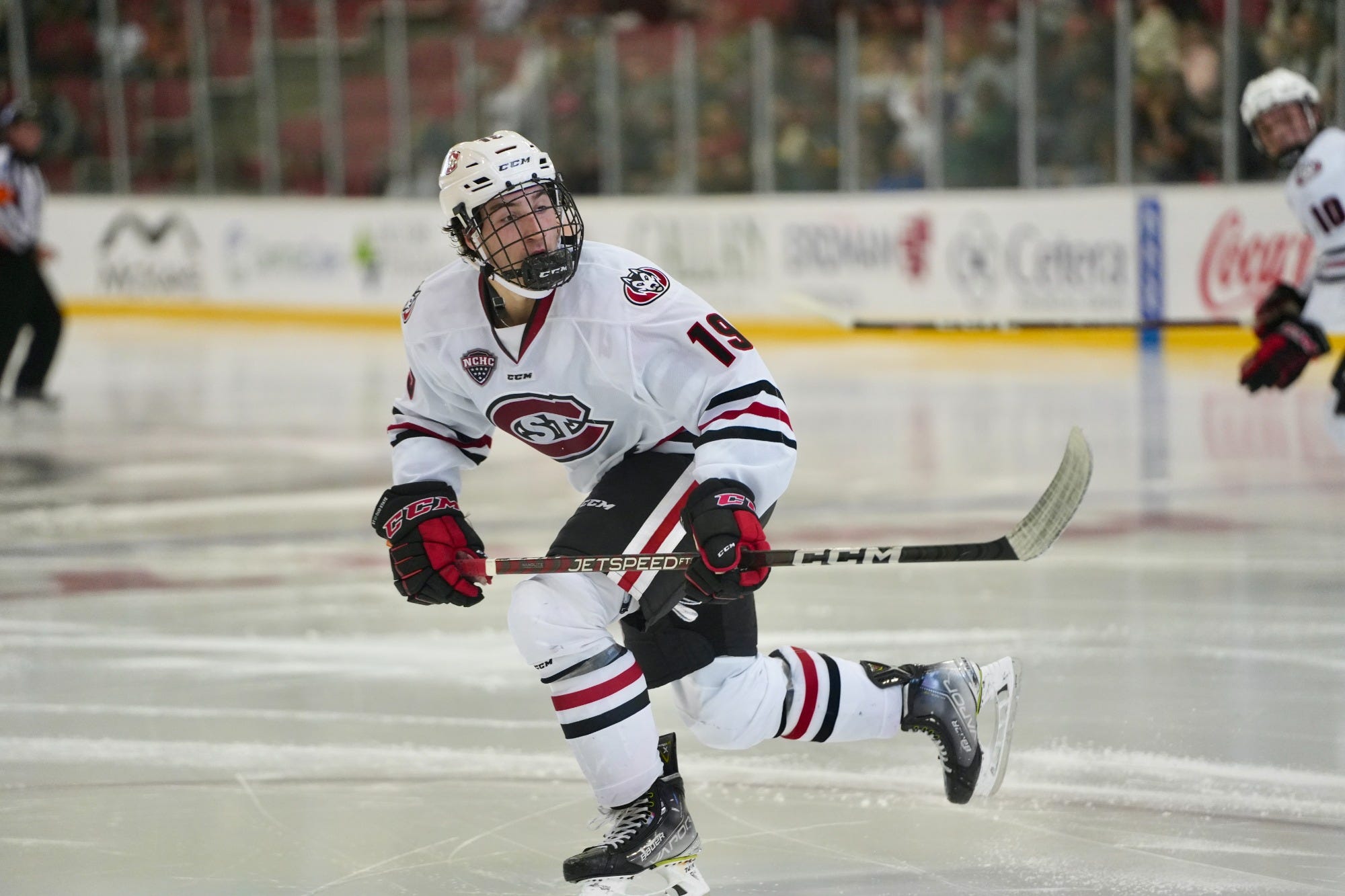
During the first half of the 2021-22 Gophers season, Cruikshank was sixth on the team in xGF/60 based on an expected goals model I was using to track Minnesota’s season. I will list my model below. Cruikshank only had three goals and two assists in the first half but finished higher than Blake McLaughlin in xGF/60. McLaughlin had four goals and 18 points in the first 18 games.
Cruikshank finished in front of Sammy Walker and Bryce Brodzinski for the full season in xGF/60 and right behind McLaughlin in xGF. McLaughlin finished the year with 13 goals and 33 points in 39 games, Walker had 14 goals and 27 points in 39 games, and Brodzinski had 12 goals and 26 points in 39 games.
So how did Cruikshank have a higher xGF/60 than two forwards who had almost double the goals and points than he did?
The reason is, he created more offense per 60 minutes. Cruikshank was one of, if not the most aggressive forwards on the Gophers last season and likely amongst the top in all of college hockey. The Wisconsin native also finished fifth on the team in puck battles won per 60 minutes. Cruikshank and his aggressive mindset would always create offensive turnovers for his linemates with his play along the boards. But reflective in the points collum, Cruikshank’s linemates didn’t finish on those opportunities he created time in and time out.
To me, play driving first stems from a player’s effective zone entry ability and a player’s successful zone breakout ability.
Moving from defense to offense and moving the puck forward are huge attributes when discussing a player’s “play-driving” tendencies. Some questions I asked myself when I tracked the Gophers last year.
What forwards are the best at controlled entries? What forward is the best in generating breakouts? Which forwards dump the puck into the offensive zone the most? What forward loses the puck the most in the defensive zone and offensive zone? Can I use these answers to show who the best play drivers are?
The Data
Only Nelson, Walker, Jack Perbix, Lucius, and Meyers dumped the puck fewer times out of the defensive zone. Only Meyers, Knies, and Lucius ranked ahead of Cruikshank for scoring chances created per 60 minutes off the rush.
In terms of successful entries, Cruikshank finished ahead of Lucius and Nelson per 60 minutes. Lucius had four more points than Cruikshank in nine fewer games. Only Nelson, Walker, and Lucius had fewer puck losses in the neutral zone. Lastly, Cruikshank led the Gophers in takeaways in the offensive zone and counter-attack shots.
After reading the data, one can reasonably conclude that Cruikshank was the Gophers’ best forechecker during the 2021-22 season, one of the best forwards when playing in transition, and showed average results getting out of the defensive zone.
Cruikshank’s success with the Huskies reminds me a lot of Florida Panthers forward Carter Verhaeghe. Verhaeghe broke into the NHL in 2019-2020 with the Tampa Bay Lightning where he posted nine goals and 13 points in 52 games. He was let go and signed by the Panthers where in 2020-2021 he posted 18 goals and 36 points in 43 games. Verhaeghe went from the fourth line/scratched in Tampa to the first line and number one power play unit in Florida.
To some, going from .17 goals per game with Tampa to .41 goals per game with Florida came out of nowhere but to others, it was more than expected.
In 2019-20 Verhaeghe was second on the team in successful entries, third in counterattack shots, and fourth in offensive zone takeaways. Verhaeghe was only averaging just a hair over nine minutes a night on what you would call a grinder line. Verhaeghe fit the title as a grinding fourth-line guy but there was still some serious offensive potential in him.
From the fourth line to the first line playing with Aleksander Barkov and Anthony Duclair most of the time, Verhaeghe was also able to get 95 shifts with Barkov and Jonathan Huberdeau. Barkov had 26 goals and 58 points in 50 games, Huberdeau had 20 goals and 61 points in 55 games, and Duclair had ten goals and 32 points in 43 games.
The goals were scored in large part due to Verhaeghe’s aggressive and forechecking ability, but also his successful zone entry ability and controlled zone exits leading into offense.
The exact same thing is happening with Grant Cruikshank of the St. Cloud State Huskies. His forechecking and aggressive mindset has led to higher chances and more offense for his linemates, just as it did at Minnesota, but this time it’s showing up on the scoresheet.
Cruikshank currently centers Micah Miller and Tyler Kupka on the second line for the Huskies. Kupka has two goals and seven points in six games, and Miller has one goal and four points in six games.
Cruikshank’s game has sparked both Kupka and Miller to play like him, leading to that line starting to become one of the most dominant forward trios in the NCAA. Cruikshank has been one of the biggest aspects as to why the Huskies are off to a 6-0-0 start, which is the team’s best start since 2017-18 and the third-best start in the Division-I era (1987-88).
So, as much as Gopher fans will look at Cruikshank’s success and wish he was still here, there is actually another analytical gem currently in the Gophers bottom-six. His name is Charlie Strobel and he is absolutely destroying all models. Stay tuned to my substack and Twitter for more updates but you can expect a feature on Strobel soon.
A Final Thought
This is just a great example of what simple data tracking and analytics can tell us about a team and a player. I really hope teams and coaches start using more of this to help benefit their teams.
Now, Cruikshank’s success is a little different since he came from the transfer portal but teams can use this with the players they have in their system already. Elevating a guy from a smaller role to a high one is risky but when looking for a spark it is a great decision that will pay off.
The numbers don’t lie.
Expected goals stats courtesy of Dylan Loucks. Some others from InStat Hockey, those stats linked in the text.